We had quite a few potential plans for our time on O‘ahu, but were in a bit of an odd mood so we didn’t get to all of them. We’re not sure whether it was the news of Duane’s death, general travel fatigue, or something else. Regardless, we had a very restful and relaxing time in Honolulu – even if we didn’t see and do everything we’d hoped to.
We were staying in the Ilikai Marina condominiums, which are right on the north-west edge of Waikiki, closest to downtown Honolulu. Fortunately for us, there was no one in the apartment the night before we arrived, and our host was happy to let us in early in the morning. Which was great, since we were supposed to be off the ship by 7:30 am.
So, we walked to a bus stop that was near the cruise dock and Greg left Karen guarding the luggage while he went to a 7-11 to pick up bus passes. Then we hopped a bus to Waikiki, which let us off just around the corner from our building.
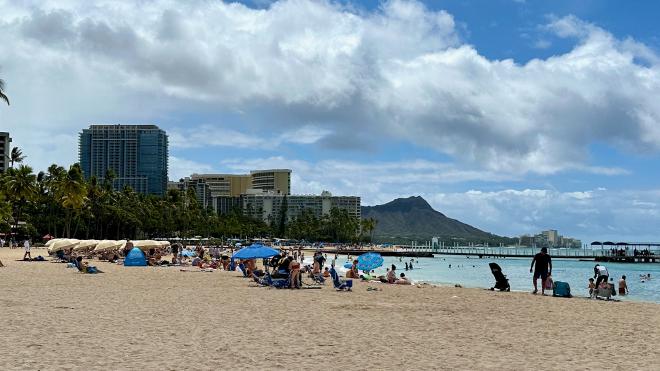
The apartment was a five minute walk from Kahanamoku Beach, which is the end of a string of beaches that run the entire length of Waikiki. This is the view looking down the beach towards Diamond Head, the large hill in the distance.
Most days we went for at least a short swim (so if we don’t mention it, make an assumption!). The area near the apartment was protected by a breakwater, so it had only gentle waves and was great for just bobbing around. It was also frequented by some fairly large green sea turtles, who seemed happy to share the space with us. We saw at least one every time we went swimming.
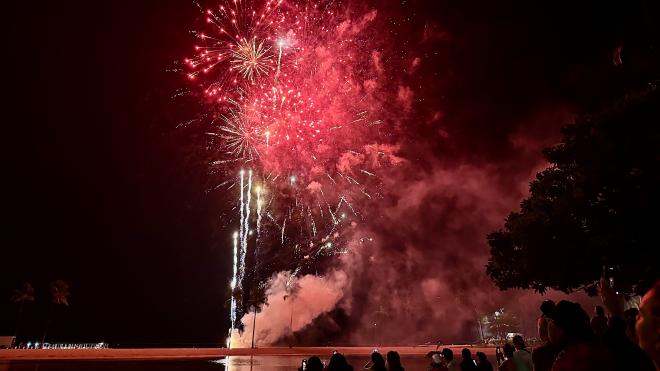
On Friday evenings there’s a short fireworks show over the Hilton Lagoon, right beside Kahanamoku Beach. We got back from dinner at the Waikiki Brewing Company (good beer, OK food) just in time to catch it.
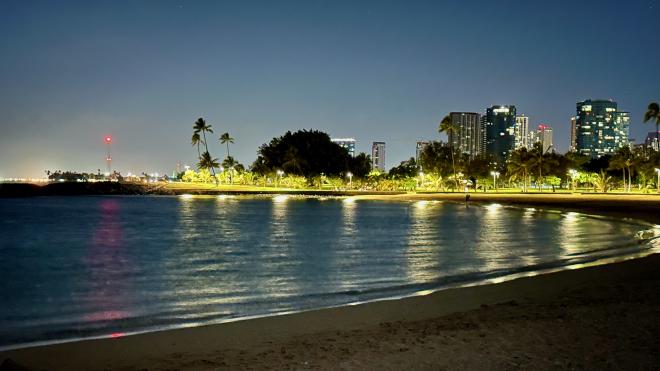
The next day was pretty quiet. In the evening we took a walk through Ala Moana Park, just across the Ala Wai Canal from Waikiki. This is Magic Island Beach looking towards downtown Honolulu.
And this is the view across Waikiki to Diamond Head from about the same spot.
The next day we shook off our lethargy and decided to put our bus passes to good use by visiting the Bernice Pauahi Bishop Museum.
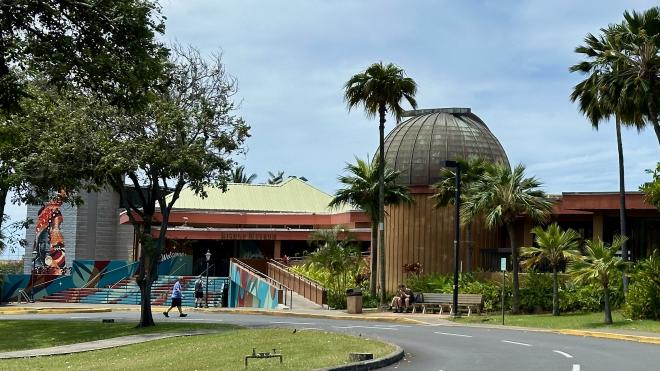
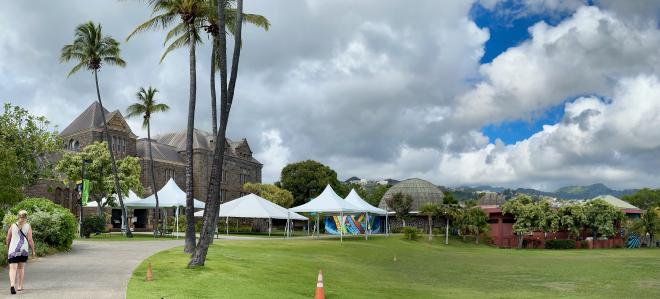
The Museum is in several buildings on a large property. It was founded in 1889 by Charles Bishop in honour of his late wife, Princess Bernice Pauahi Bishop. This is the entrance building with a small planetarium beside it.
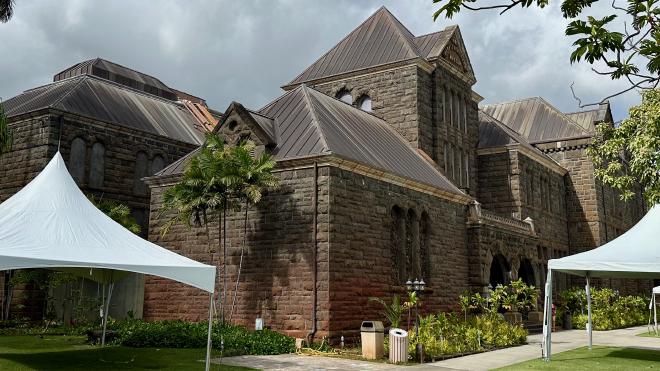
The exhibits we were most interested in covered Hawaiian and Polynesian history, and were housed in the original Museum building, opened in 1889.
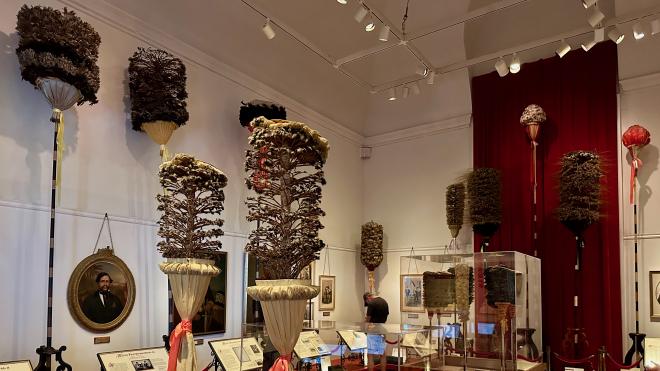
This room told the story of the Hawaiian monarchy, from King Kamehameha I, who first united the Hawaiian Islands in 1810, through Queen Lili‘uokalani, who was forced to abdicate in 1895 following the hostile usurpation of her government in 1893. This led ultimately to annexation of the Islands by the United States in 1898, against the clearly expressed wishes of the Hawaiian people. The large feather plumes are kāhili, used to announce a chief’s presence and also serving as spiritual protection. The Bishop Museum has the world’s largest collection of kāhili.
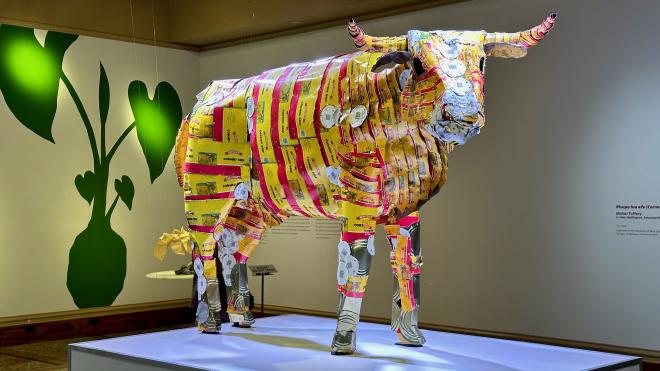
When Europeans began to settle the Hawaiian Islands, they brought foreign foods with them that had a largely negative effect on the diet of the native Hawaiians. One of the most significant was canned meat, part of the subject of an artistic exhibit entitled Corned Beef & Kalo. This sculpture, Pisupo lua afe (Corned beef 2000) by Michel Tuffery, is made entirely from corned beef tins.
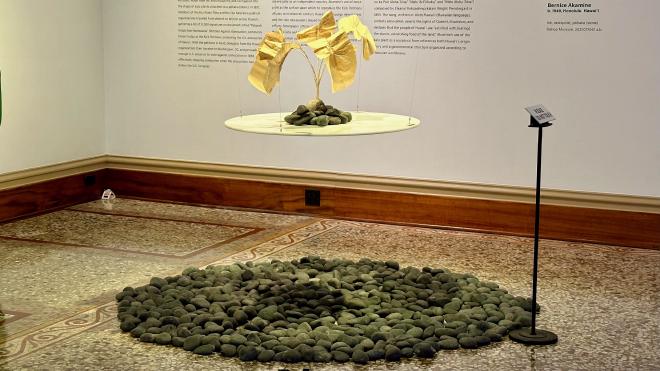
This is kalo, also known as taro, as represented in the sculpture KALO by Bernice Akamine. The plant’s leaves are reproductions of pages from the Palapala Hoopii Kue Hoohuiaina, the petitions against annexation, from 1898. At the time there were approximately 40,000 Hawaiians; the petitions included 38,000 signatures. The stones represent Hawai‘i’s origin stones of legend. Kalo was the staple of the Hawaiian diet before European contact; its root is mashed to make poi paste.
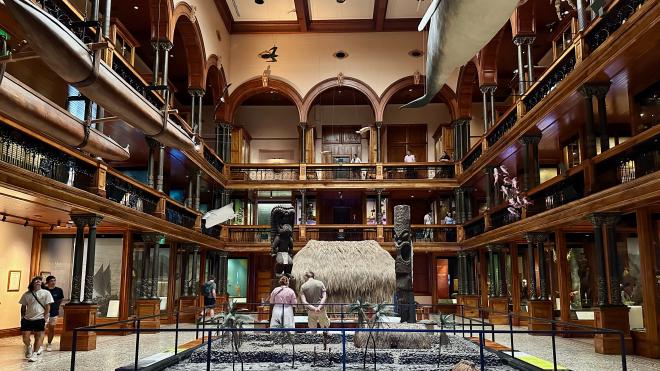
The main hall of the Museum tells the history and legends of the Hawaiian people from prehistory to the modern era. It also includes a sperm whale skeleton, half enclosed in a papier maché skin, which was one of the original Museum exhibits. This is at the top right of the photo. In the current Museum, natural history exhibits are in a separate building which we didn’t visit.
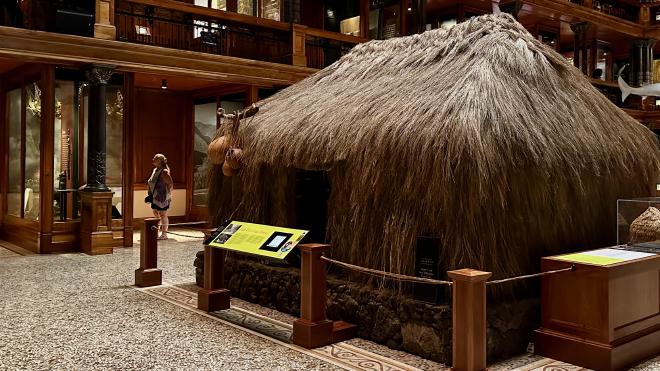
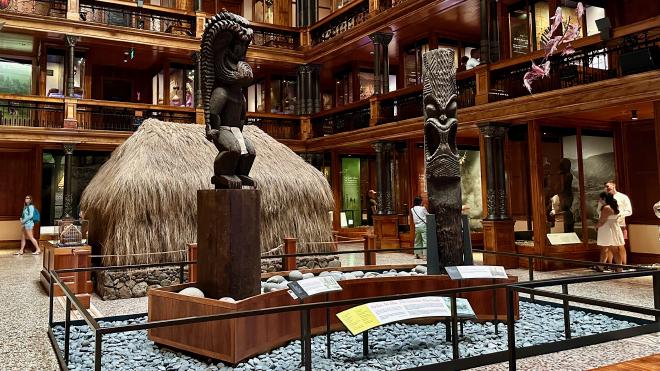
This hale pili, or grass house, was constructed about 1800, used for a century, and purchased by the museum in 1902. Originally a sleeping house or hale moe, it is one of the last surviving examples of traditional Hawaiian construction. The current pili grass thatching dates from 2008.
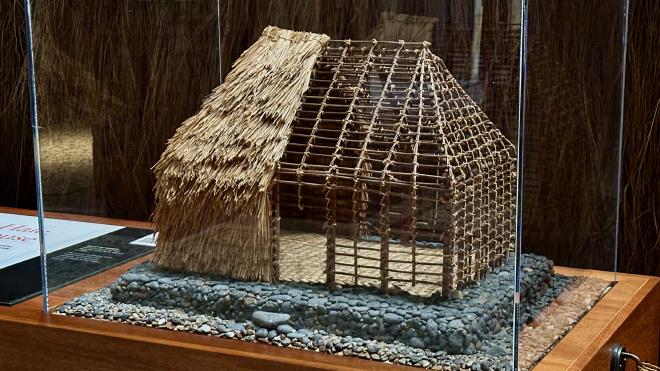
This cutaway model shows the interior construction of the hale pili. The frame is made from the dense native wood uhiuhi, lashed together with cordage of ‘uki‘uki.
These traditional temple images represent the gods of the two Hawaiian seasons, Kū and Lono.
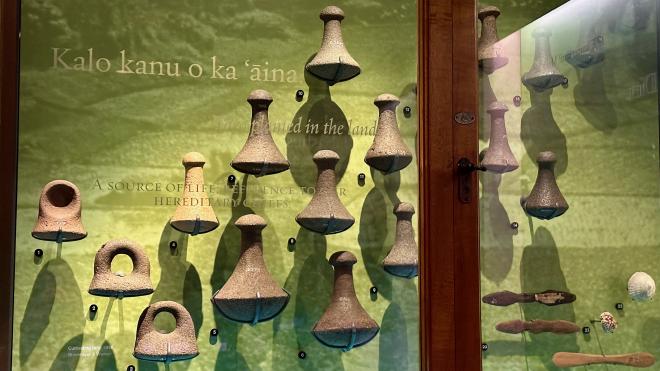
These are pōhaku ku‘i ‘ai (food pounders) which would be used to mash taro on a special board called papa ku‘i ‘ai, in order to make poi.
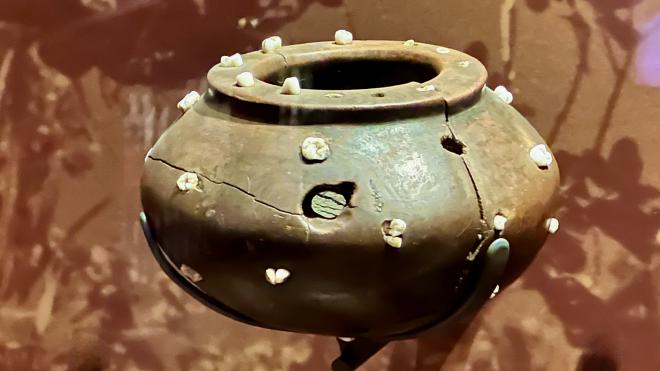
The Museum had a large display of carved wooden bowls. This one, intended to be used as a spittoon, is decorated with human teeth.
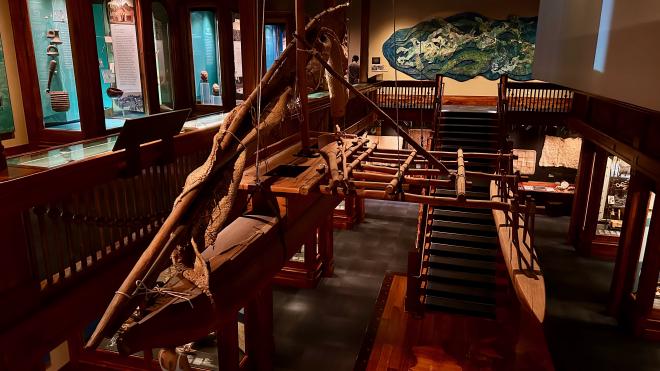
In the adjacent Polynesian history section of the Museum, this Fijian fishing canoe or vaqa is suspended from the ceiling. Before being purchased by the Museum in 1985, this was used for many years by a family on Fulunga Island.
We were in the Museum for about four hours which was just enough to properly visit the core Hawaiian and Polynesian collection. As we mentioned, we didn’t get to the natural history exhibits at all; the building housing them is off to the right of this courtyard view.
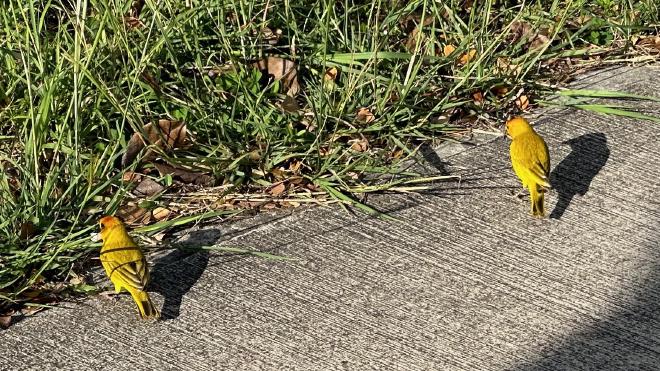
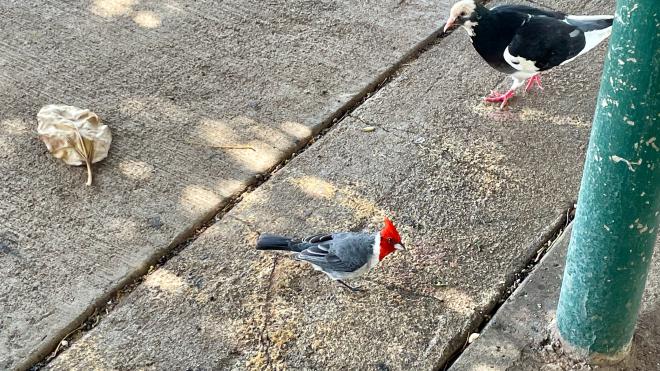
Taking the bus back we thought we’d missed a change in the downtown core, and decided to walk the few kilometres back to the apartment. (It turned out we were wrong; the bus we thought we’d missed passed us a few minutes later.) Along the way we spotted these pretty birds on the sidewalk.
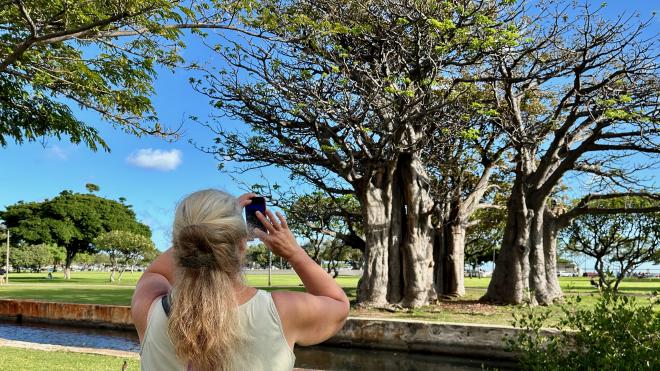
We also spotted these trees in Ala Moana Park, so here’s another picture of Karen taking a picture of a plant.
The next day was another quiet one. Greg’s friend Deena Frooman, who is originally from Honolulu, had recommended we visit the Liliha Bakery. (She also recommended Tokkuri Tei and Happy Days, but we weren’t able to make it to either of those.) Liliha happens to have a Waikiki location, so we walked there along the beach for a mid-afternoon meal. Karen had the eggs Florentine and Greg had the kimchee fried rice with eggs, both of which were excellent.
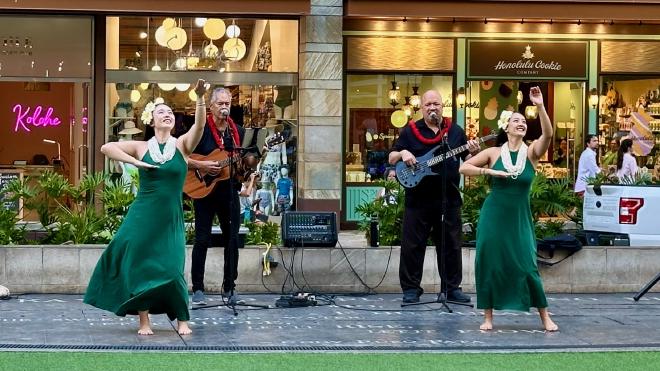
On the way back from our meal we stopped to watch these performers at an outdoor mall. The woman on the right is the daughter of the man on the left; apparently they’ve been hired by the mall management to perform at this location twice weekly for over thirty years.
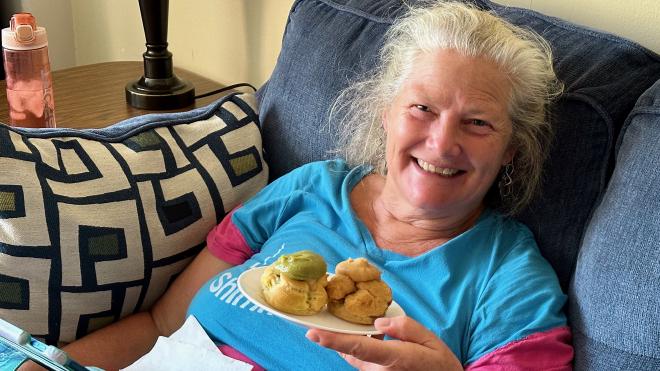
The main reason Deena had given for going to Liliha was the Coco Puffs (no relation to the cereal of the same name). We were way too full after our meal to consider dessert, but we bought some to have at the apartment that evening. The Coco Puff, on the right, is a puff pastry with a chocolate cream pudding filling and a thick vanilla and coconut frosting on top. The pastry on the left is similar but green tea flavoured – and it ended up waiting for breakfast the next morning, since the Coco Puff was very rich.
Being herself a dancer, Karen really wanted to see some traditional hula and the best way to do that was at a luau. After a bit of internet research we decided that a smaller, more intimate experience would suit us best, so we booked tickets for the luau at Nutridge Estate, in Pu‘u ‘Ualaka‘a State Wayside, in the hills overlooking the city.
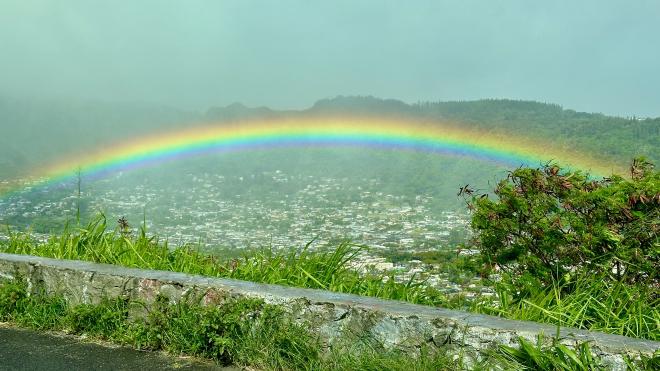
We were picked up in a shuttle provided by the luau. In Waikiki it was sunny, but we could see clouds over the mountains inland. As we climbed the hillside we were soon in rain. We stopped briefly at a lookout over the Manoa Valley, where we were treated to this spectacular rainbow.
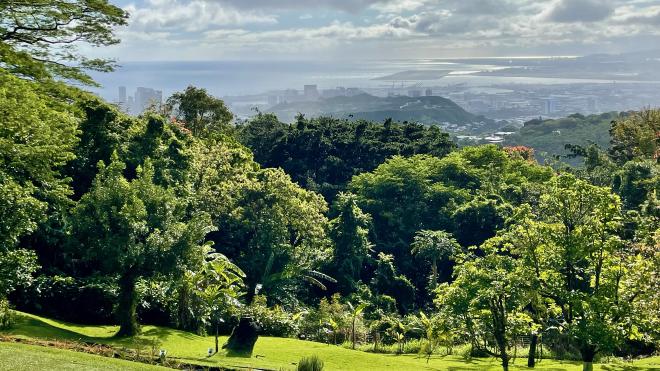
Pu‘u ‘Ualaka‘a means “sweet potato rolling down the hill” and is a reference to the original crop grown on the mountainside. Later, this was home to Hawai‘i’s first macadamia nut plantation, which is the source of the current name. This was the view from our table – at least, whenever the rain held off. At other times we could barely see the trees, let alone the city.
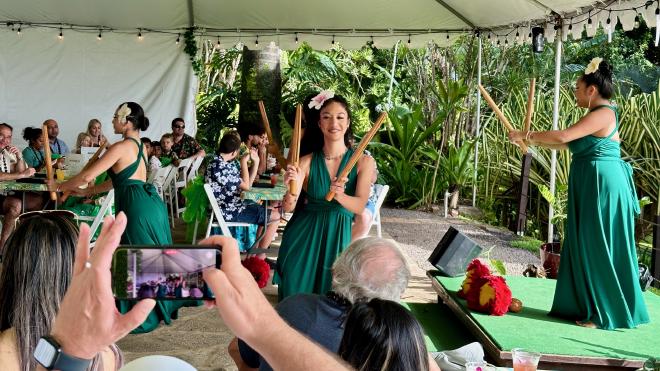
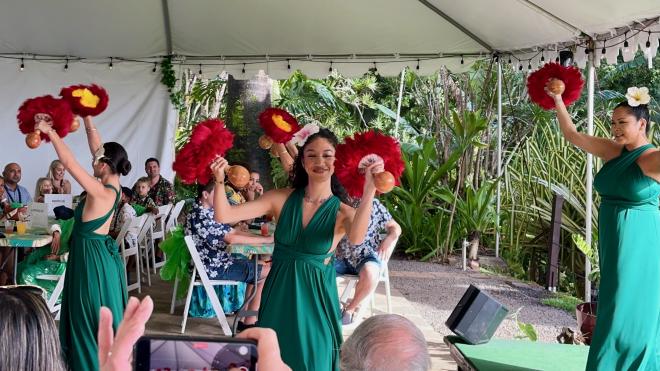
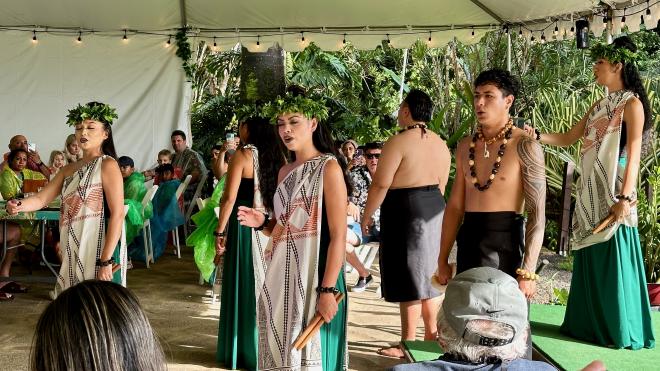
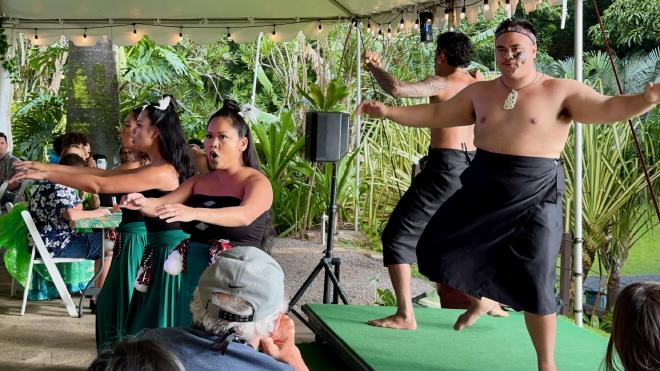
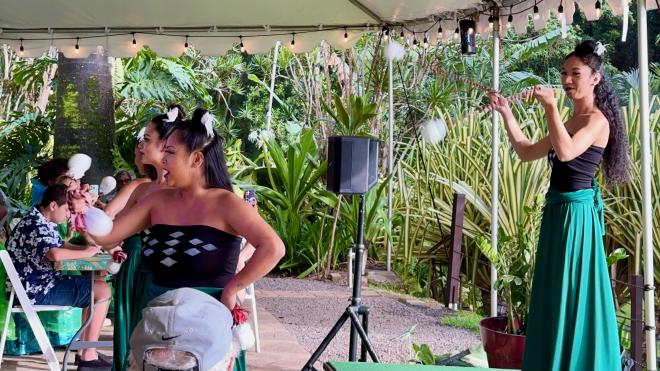
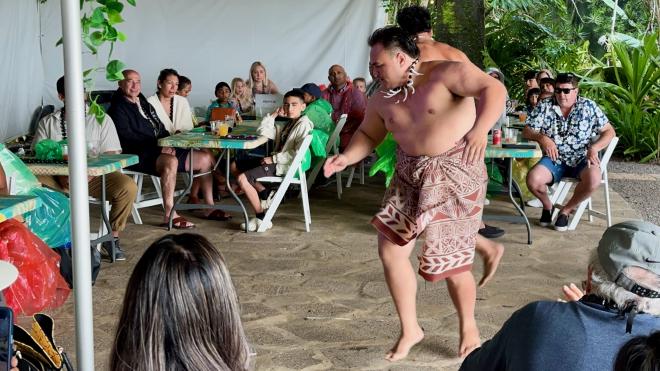
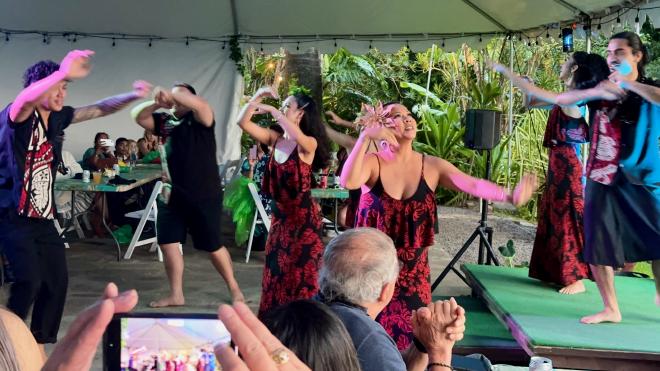
Before dinner we were entertained with dances from around the Polynesian Triangle. Normally these would have been presented in a small outdoor amphitheatre, just down the hill, but because of the intermittent rain everything was moved into the main dining tent.
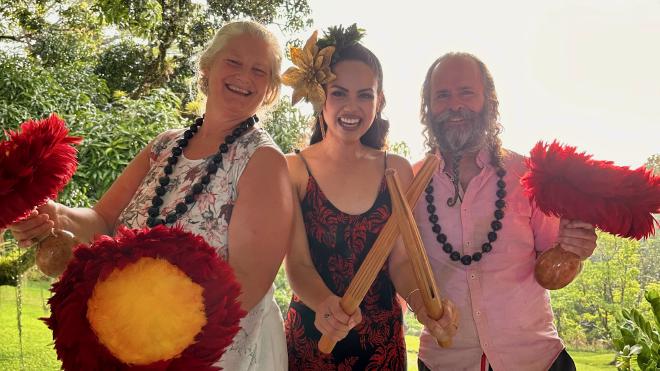
One of the dancers referred to these as “Hawaiian maracas”.
The dancers were also very good singers.
This is the traditional Māori haka.
And this is Hawaiian poi, progenitor of the poi spinning technique found today in the flow and juggling communities.
A Samoan slapping dance.
After the dances, but before dinner, we had a chance to wander the grounds (in disposable ponchos against the rain), participate in ti leaf bracelet weaving, and chat with the dancers. Karen and this young woman had a long discussion of the similarities and differences between bellydance and hula movements.
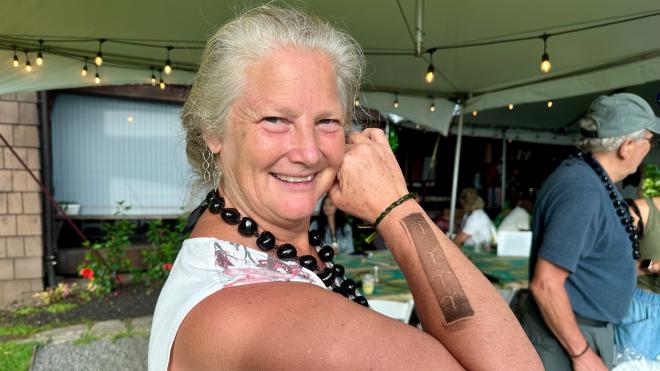
Karen also got her first tattoo. Or maybe it was a water-soluble stamp. Whatever. The birds represent safe travels.
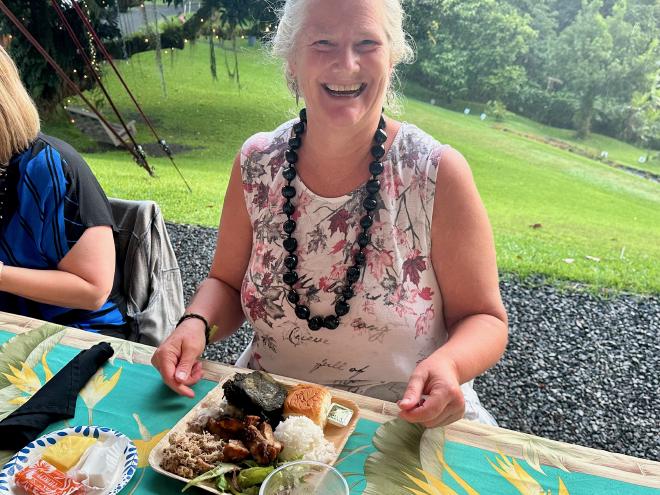
Dinner was a selection of traditional Hawaiian foods, including pulled pork cooked in an imu (cooking pit), seasoned chicken, sticky rice, and sweet potatoes and pork steamed in banana leaves. Dessert included a bar made from sweetened poi and a liliko‘oi bar (which we actually had with coffee the next morning; lemon flavoured and quite delicious).
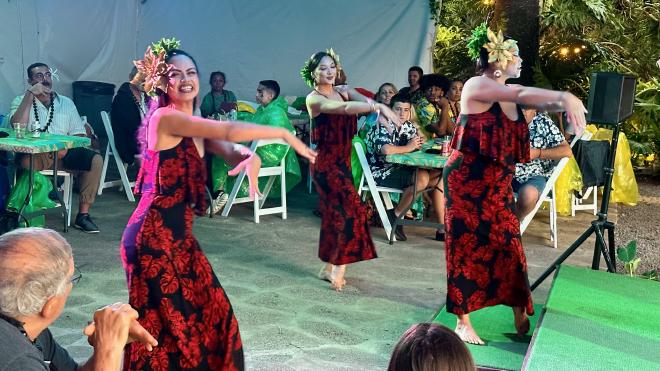
After dinner there was more hula…
… and still more hula…
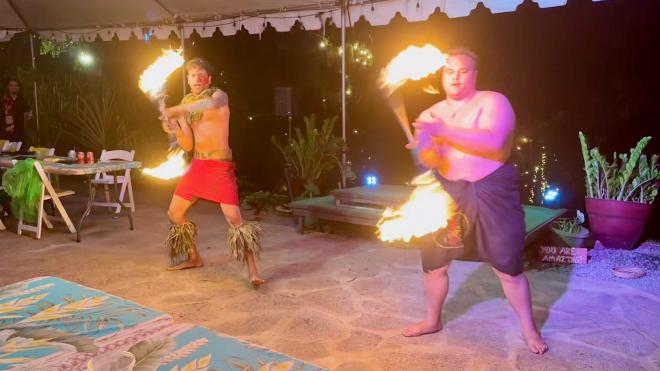
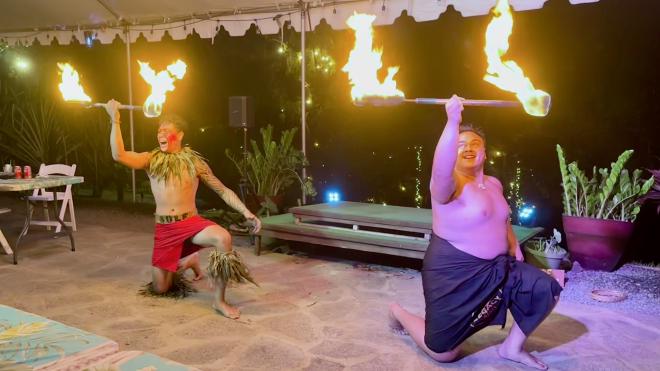
… followed by fire knife spinning. Spinning the Polynesian hooked knife has been a demonstration of martial prowess for centuries. Fire was added in Tahiti in about 1948 and has since spread throughout Polynesia.
The performers were very skilled, and even avoided burning down the tent.
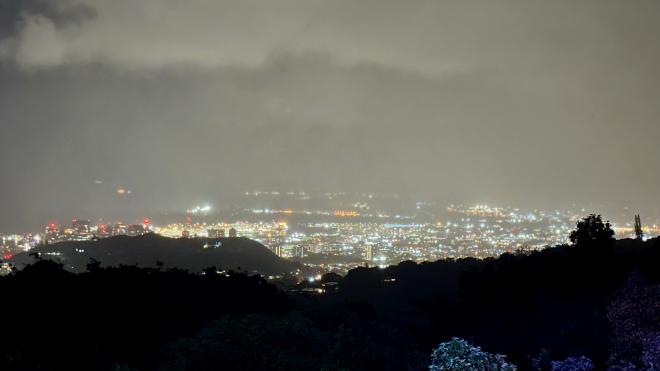
By the time the luau was over, the city lights were out. They looked quite pretty through the gently-falling rain. When our shuttle got back to Waikiki, the sidewalks were completely dry: it hadn’t rained at all down by the beach.
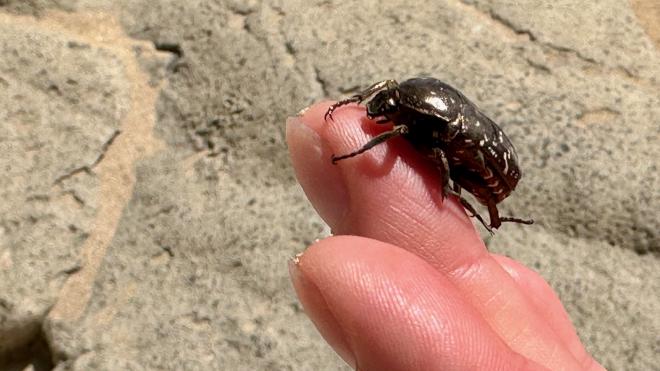
The next day we decided to go for a walk to the far end of Waikiki and the foot of Diamond Head. Karen found this interesting beetle on the sidewalk.
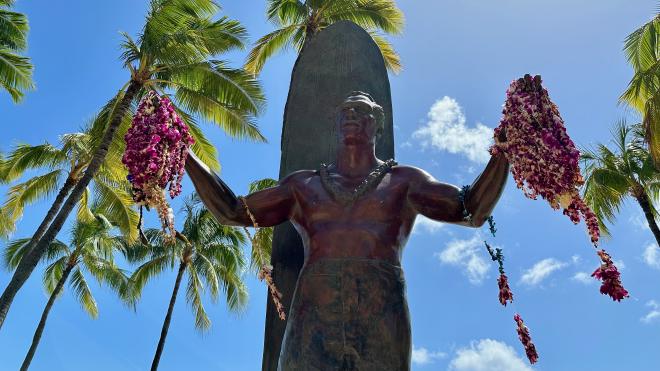
At Waikiki Beach beside Kalākua Avenue, there’s a statue of Duke Paoa Kahanamoku, native Hawaiian and three-time Olympic gold medalist in swimming. Duke is most famous as the “Father of International Surfing”, for introducing the traditional Hawaiian sport to North America, Europe and Australia. He was also a movie actor and the Sheriff of Honolulu from 1934 to 1960.
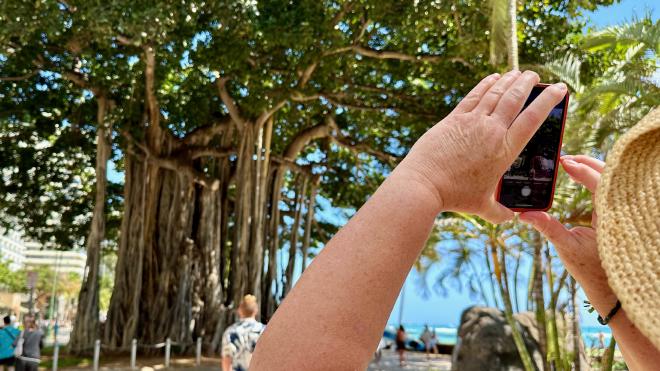
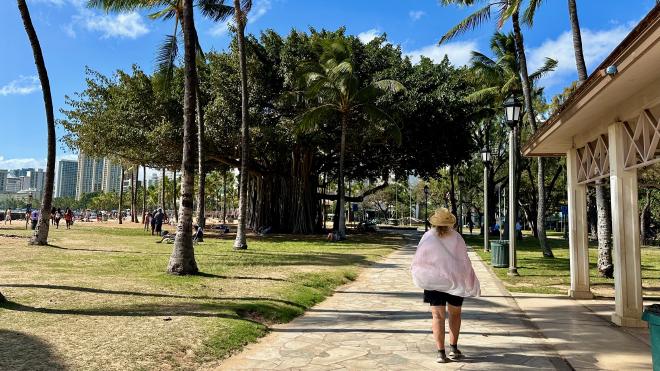
As you might have gathered from previous entries, Karen is really fond of banyan trees. So, here’s yet another picture of Karen taking a picture of a plant.
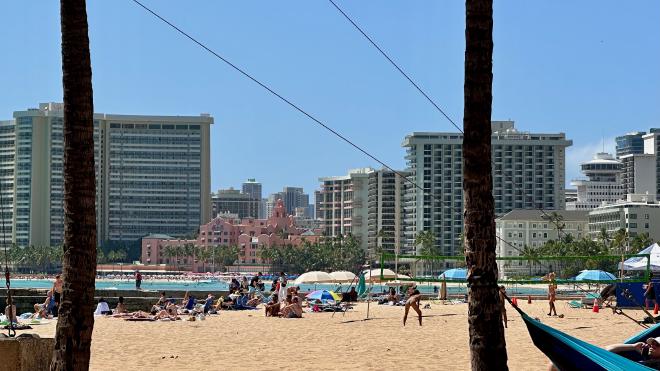
This is the view looking back up the beach. The low pink building is the Royal Hawaiian, one of the original two Waikiki hotels.
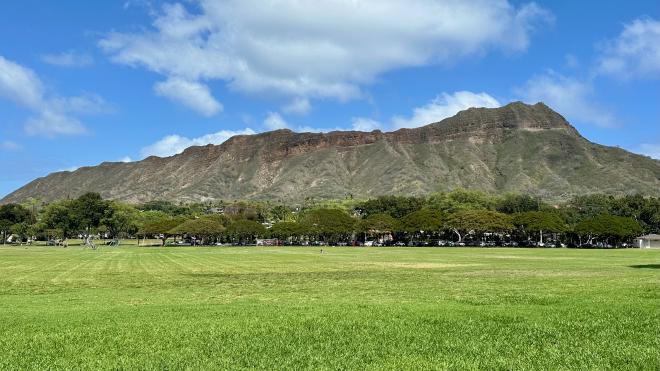
At the far end of Waikiki is Diamond Head, the remains of a volcanic crater. This is the view from Kapi‘olani Park.
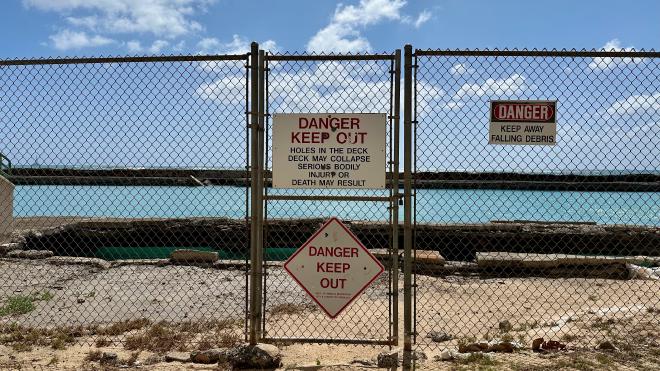
On the waterfront across from the park is the War Memorial Natatorium, an ocean swimming pool constructed as a “living” memorial to Hawaiian military and civilian contributions to World War I. Unfortunately it’s been closed since 1979 and is in need of serious renovations.
We stopped near the Honolulu Aquarium for a snack, where we were joined by some friendly (hungry?) birds.
There were splashes much larger than this, but we didn’t manage to photograph them.
One thing we definitely wanted to visit in Honolulu was the Pearl Harbour National Memorial including the USS Arizona Memorial. The Arizona is reached by boat, which requires a US$1 ticket, and tickets are only released to the public at 3 pm the day prior. So, it took us a few attempts to actually get two – but eventually we did, and that became our main outing for April 26th.
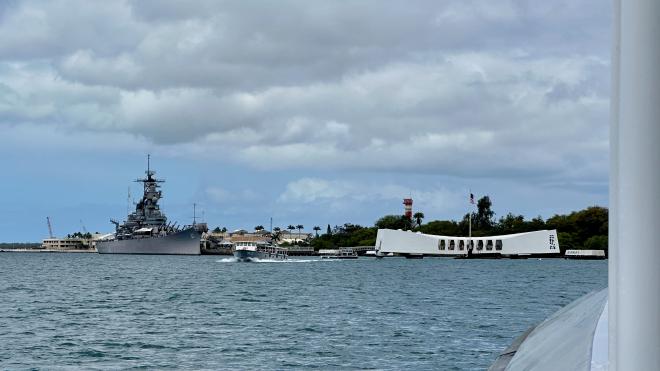
After an interesting hour on the bus touring various parts of Honolulu, we arrived at Pearl Harbour shortly before our ticketed time. We queued, had a brief wait in a theatre, and were onto the boat to the Memorial. The ship on the left is the Battleship Missouri Memorial. The USS Arizona Memorial is the low white structure on the right.
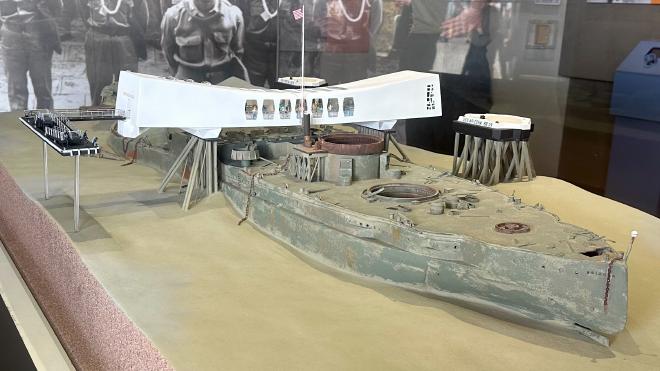
This is a model of the USS Arizona Memorial, back on the shore, which helps to understand its construction. The Arizona’s armament store exploded during the Japanese attack on Pearl Harbour on 7 December 1941. The ship immediately sank, with the loss of 1177 sailors and marines aboard. Over 900 of the bodies were never recovered, so the ship itself is a military cemetery. The Memorial, dedicated in 1962, is constructed as a bridge across the sunken hull.
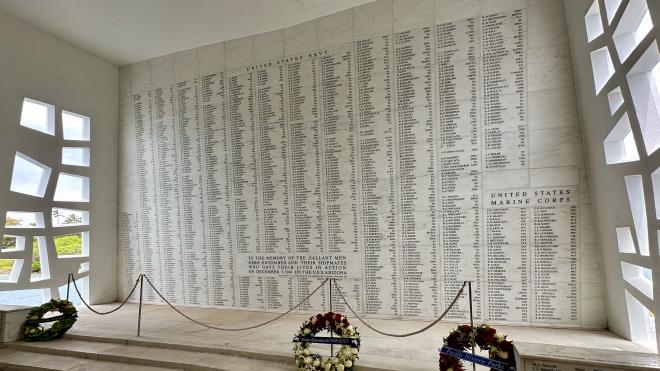
At one end of the Memorial is inscribed the list of names of those who perished as a result of the attack. To this day, the destruction of the USS Arizona remains the largest loss of life in a single US Navy sinking.
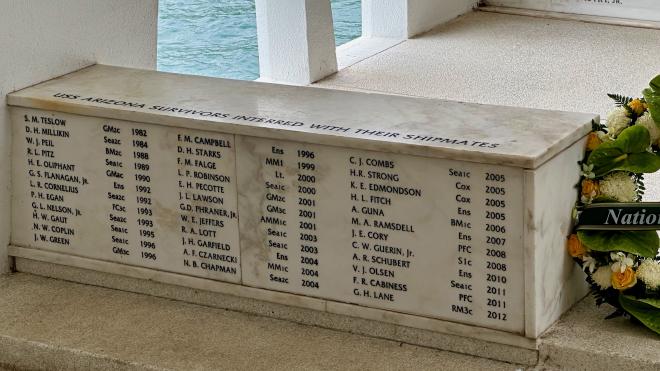
Flanking the names of those who perished in the attack are the names of those survivors who chose to have their cremated ashes interred with their shipmates. The last survivor of the USS Arizona passed away at 102 years of age, the week before our visit. He chose to be buried beside his wife in California, so there will be no further interments.
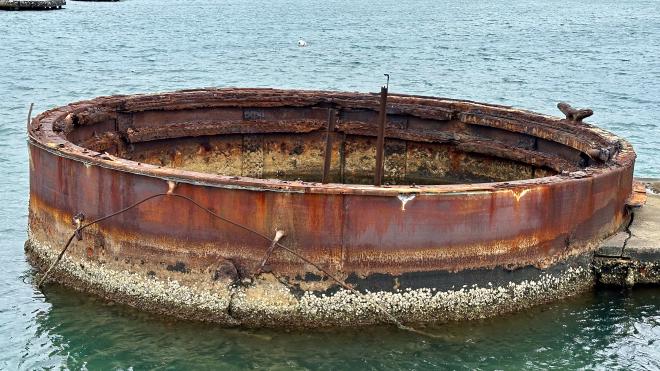
The remains of gun turret 3 extend above the water line. The white buoy marks the bow of the USS Arizona.
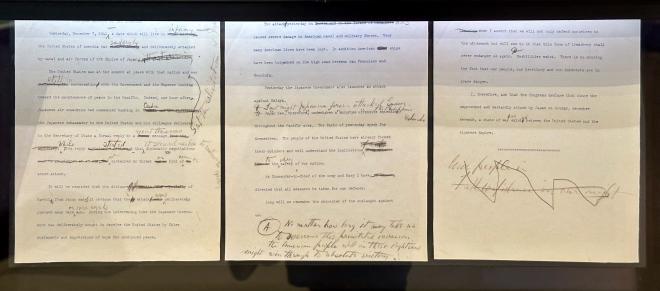
Back ashore we visited the rest of the Pearl Harbour National Memorial. It includes a large exhibit of the lead up to the attack, the attack itself, and its aftermath. This is the “Day of Infamy” speech that President Roosevelt read before Congress the day after the attack, seeking a formal declaration of war against the Japanese Empire.
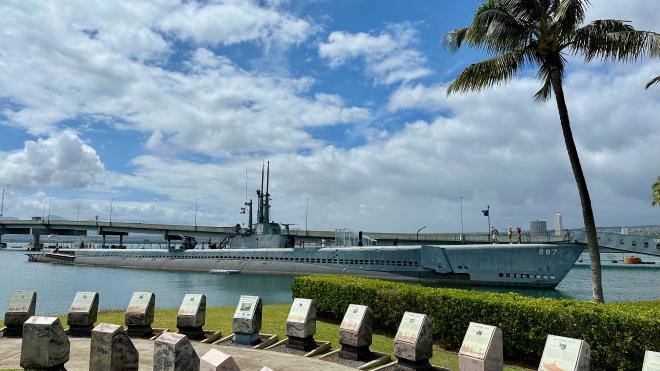
The Pacific Fleet Submarine Museum is immediately adjacent the Pearl Harbour National Memorial. This is a the USS Bowfin, which forms part of the Museum. We had intended to visit it, and also possibly the Battleship Missouri Memorial, but were exhausted after three hours at the main Pearl Harbour site.
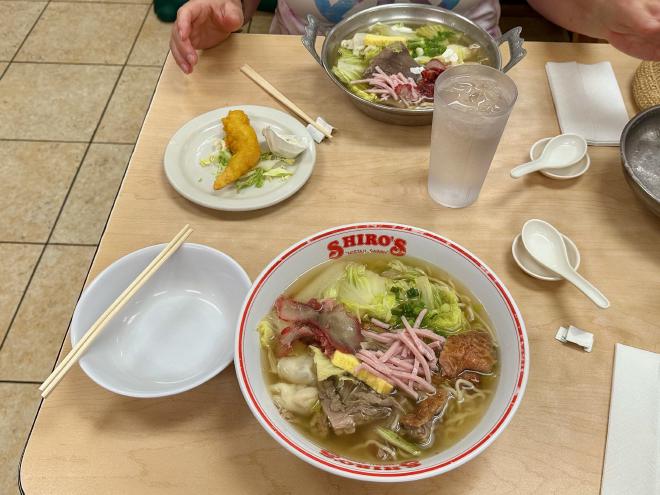
From the Memorial we hopped another bus that took us further east to Aiea and Shiro’s Saimin Haven. This was a recommendation of Greg’s friend Eric Shibuya, another Honolulu native and the only person we know aside from Greg who’s both a serious juggler and a professor at a military university. Saimin is a particularly Hawaiian take on the ubiquitous east Asian noodle soup, and Shiro’s is claimed to be one of the best places to eat it. We weren’t disappointed! Eric also recommended Young’s Fish Market and the Rainbow Drive In, none of which we were able to visit.
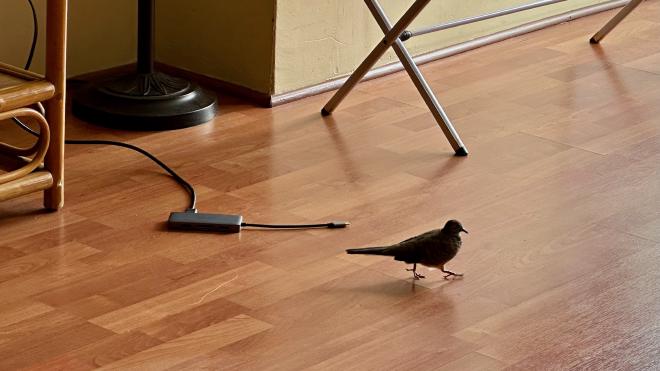
When we got back to our apartment and opened the outside doors, we immediately had a visitor. Fortunately it left with just a little encouragement.
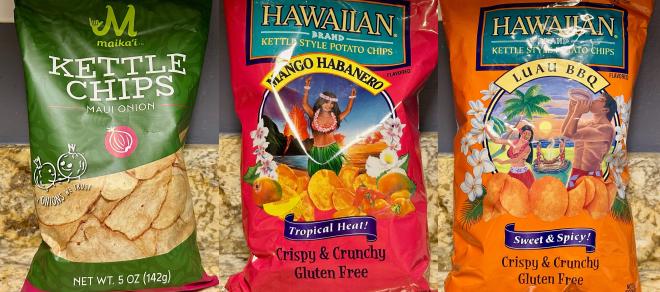
We tried these three flavours of chips during our visit. Verdict: the Maui Onion was quite nice; the Mango Habanero was spicy but otherwise flavourless; and the Luau BBQ was overly sweet and more spicy than we’d expected.
The next day was our last on O‘ahu, so a good chunk of it was spent on laundry, packing, and organizing – plus we got out for our usual swim.
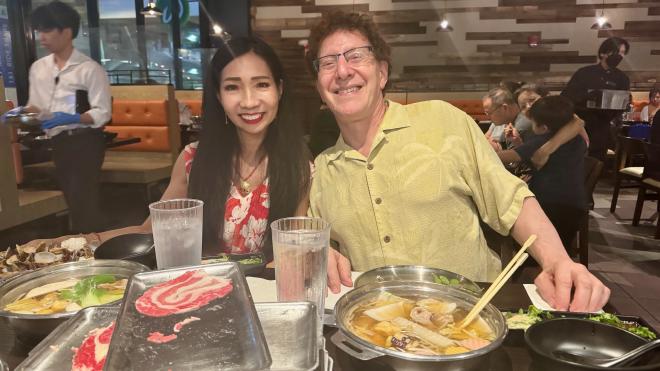
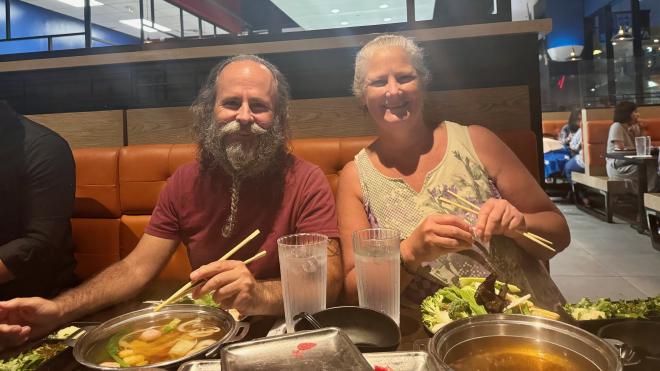
That evening we met our friends Rick and Hong Mei for dinner at the Shabuya restaurant in the Ala Moana Center. Hot tip: Shabuya doesn’t take reservations so get yourself on the waiting list well in advance – the list was running two hours long the evening of our visit. Rick had signed us up before he and Hong Mei left home, that turned out not to be early enough: when we met at the restaurant it was still showing over an hour until we’d have a table. We decided to head to another restaurant rather than wait; however, our table came up almost immediately so we went back to Shabuya – which turned out to be a great decision.
Rick is originally from Toronto. He and Greg met when the two were both members of an international working group on user interface engineering. Hong Mei is originally from Taiwan. Rick and Hong Mei are both professors at the University of Hawai‘i at Mānoa, Rick in software engineering and Hong Mei in business information technology. As near as Greg and Rick could figure, they haven’t seen each other in at least fifteen years.
Shabuya is a shabu-shabu restaurant. For one fixed price you get a bowl of broth, which is kept simmering at the table by built-in induction heaters; unlimited visits to a buffet with vegetables, seafood, sauces, and other toppings; and unlimited trays of thinly-sliced meats that are brought to the table. You cook the foods in the broth and enjoy. There is a ninety-minute limit at the table, and the staff does give you reminders to depart, but that’s plenty of time to eat more than you really need. Everything was fresh and delicious; we can see why the place is so popular.
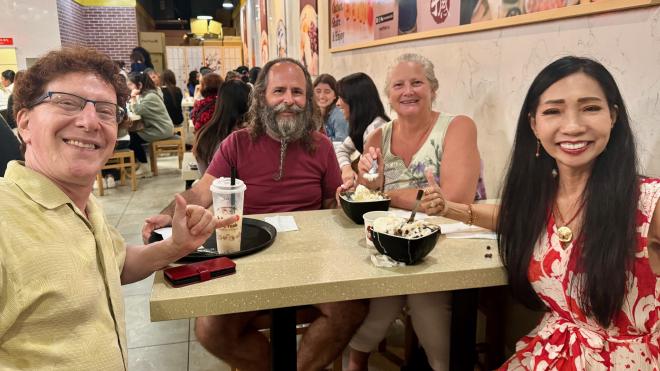
After dinner we went to Meet Fresh, which specializes in towering shaved ice desserts (in this picture we’ve already knocked down the towers). We split one, Rick had a milk tea, and Hong Mei attempted to demolish one all on her own.
It was lovely to see Hong Mei and Rick; we’re so glad that our schedules actually lined up for the one day and we’ll try not to wait another fifteen years for the next get-together!
The 28th was the day we were departing O‘ahu. We had to be out of the apartment by 11 am, and weren’t boarding the ship until 3:30 pm, so we had a bit of time left to enjoy the island. We stored our bags at a spot just across from the apartment and took another wander through Waikiki.
The sun was shining and the water was all kinds of different brilliant blues, which turned out to be hard to capture with our cameras.
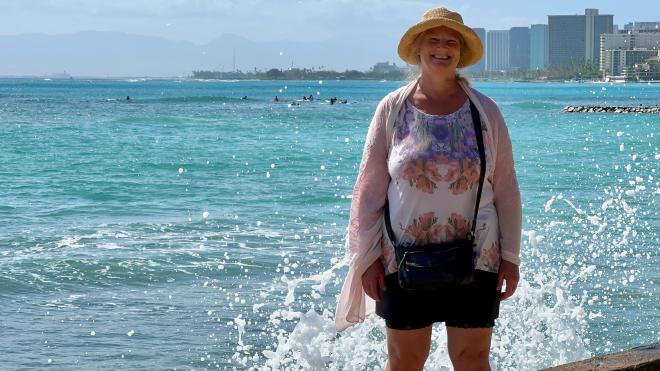
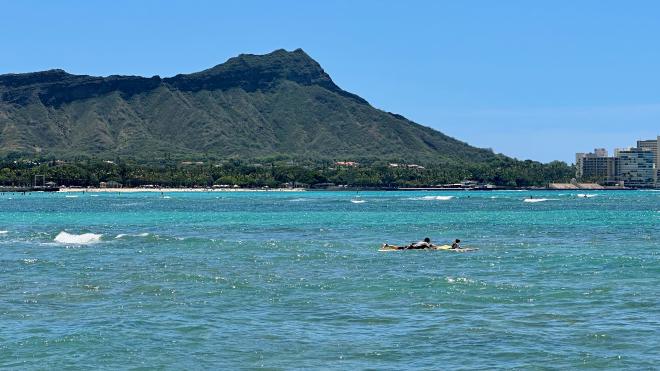
Down towards Diamond Head there were quite a few surfers in the water, including at least one surf school.
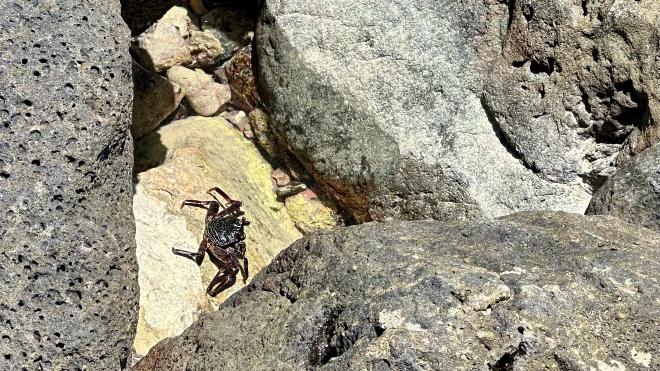
There were lots of crabs sunning on the rocks.
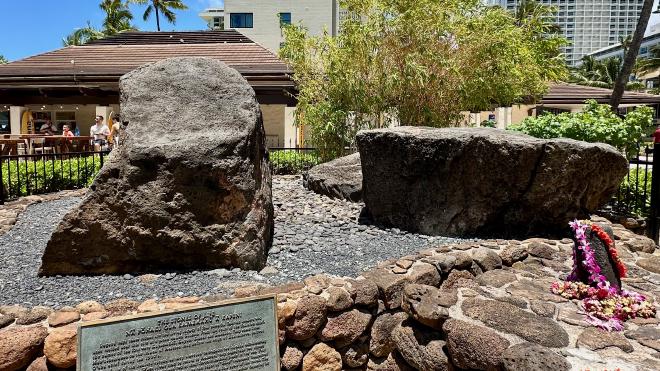
These stones are the living legacy of four Tahitian healers “known for duality of male and female spirit and their wondrous works of healing” who visited O‘ahu from Raiatea in the 1400s. The stones were quarried on their departure from the island and placed two each at their residence and their favourite swimming place by the sea, with great ceremony. In 1997 the stones were moved to a specially-constructed altar near Waikiki Beach, where they were joined by a fifth stone quarried on Raiatea and brought to O‘ahu.
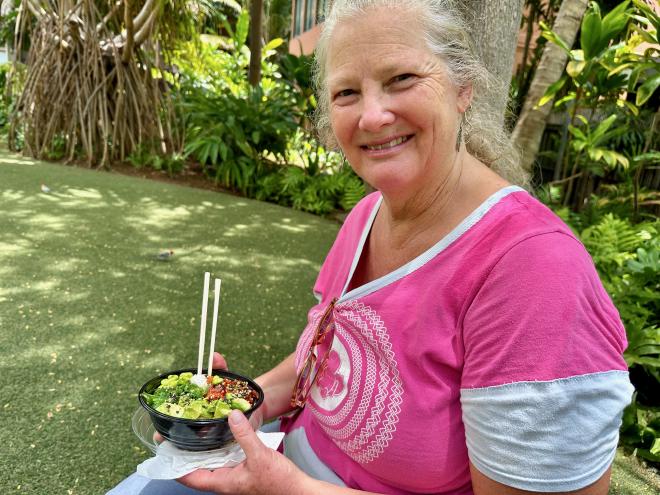
We picked up lunch from Poke Fix, a hole-in-the wall place one block off the main street that’s reputed to have the best poke in Waikiki. On Rick’s recommendation, we both had the spicy ahi (tuna) which was outstanding. We ate in a quiet garden just off the main street.
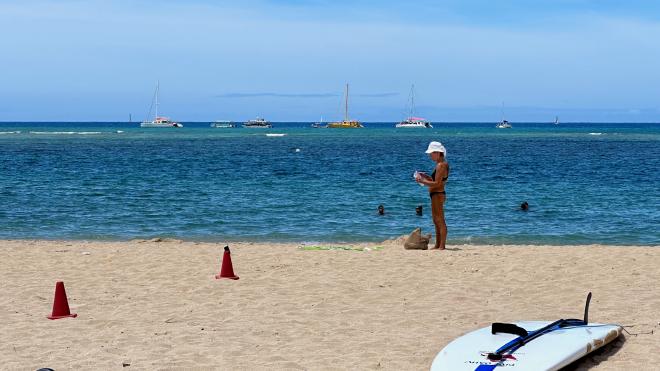
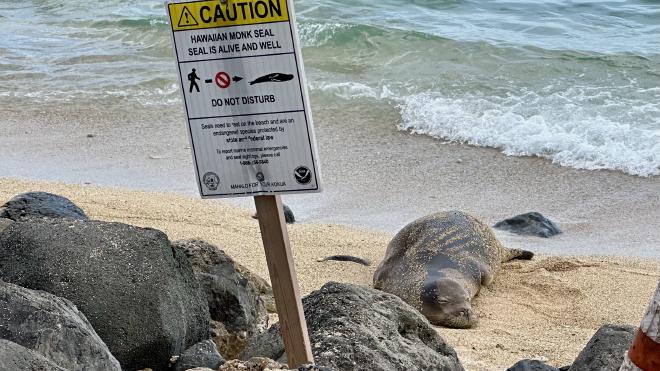
We wandered back to Kahanamoku Beach, where we found a spot to sit in the shade. This Hawaiian Monk Seal was napping on the beach. Initially it was surrounded by traffic cones; while we were sitting a “marine mammal protection” volunteer showed up and planted warning signs around it.
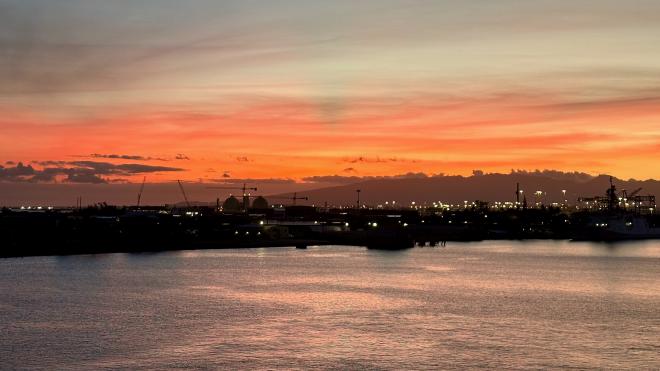
From there we picked up our bags, took a bus to the cruise dock, and had a very quick and painless check-in to the Brilliance of the Seas. We were treated to a glorious sunset over Sand Island; this is the view from our stateroom.
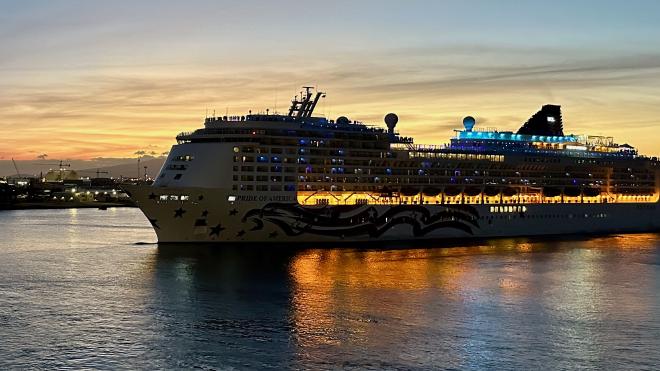
The Princess Cruises Pride of America was moored at the other cruise dock, and pulled out just a few minutes ahead of us.
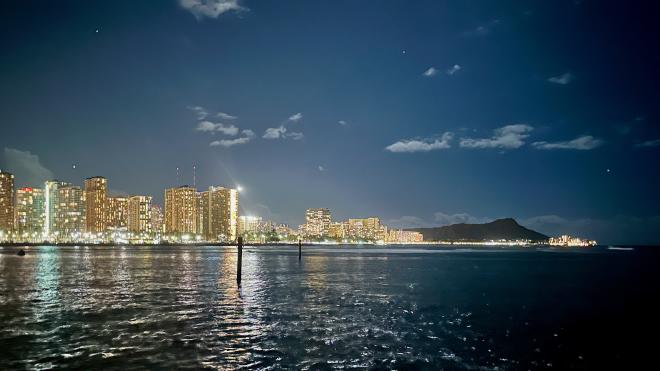
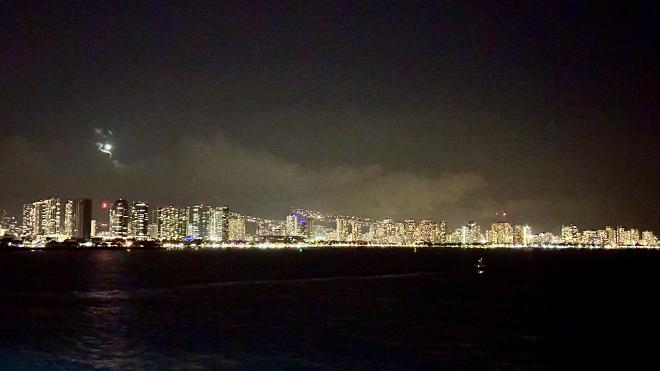
Leaving O‘ahu we headed along the coast of Waikiki, giving us one last chance to enjoy the city lights.
And then it was off for visits to two of the other Hawaiian Islands, and the five-day crossing to Vancouver.